Fasting Glucose
Table of contents
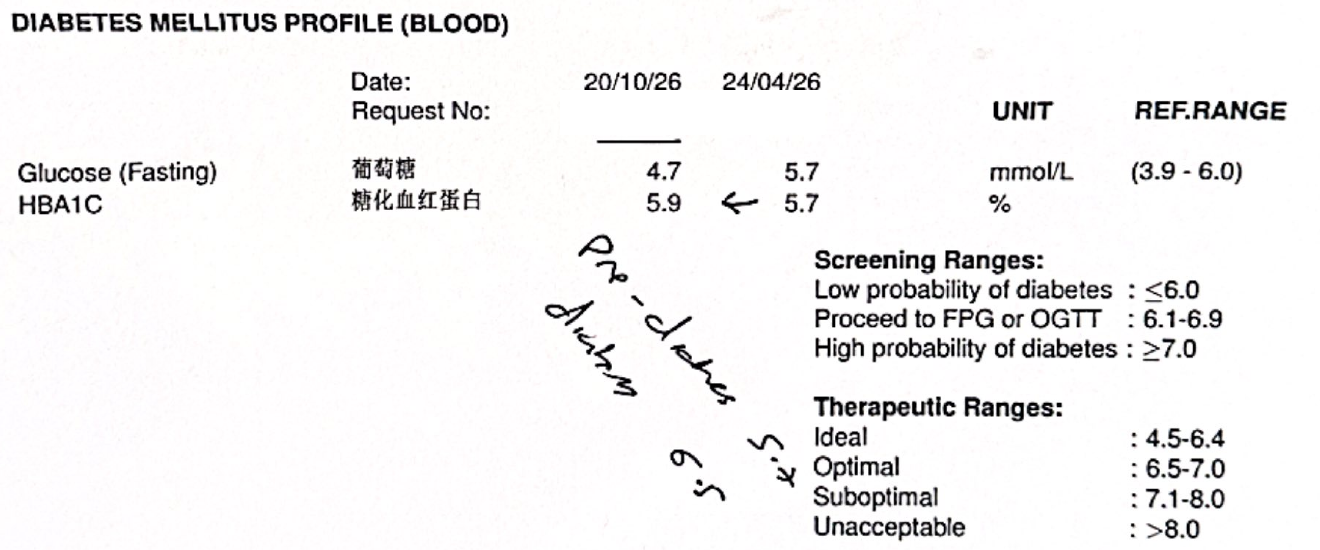
Fasting glucose is the simplest blood sugar test there is: how much glucose is in your blood after you haven’t eaten for a while. In April mine was 5.7 mmol/L, just over the line where doctors start calling it “impaired”. By October it was 4.7. This article covers what the test tells you, why April was a flag, and what probably made the difference.
Snapshot
| April 2026 | October 2026 | |
|---|---|---|
| Fasting glucose | 5.7 mmol/L (103 mg/dL) | 4.7 mmol/L (85 mg/dL) |
| Lab range | 3.9–6.0 mmol/L | |
| ADA normal | below 5.6 mmol/L | |
| My target | below 5.6 mmol/L | |
| Status | ⚠️ impaired fasting glucose (by ADA) | ✅ clearly normal |

The October report shows both results side by side:
What it is
When you haven’t eaten for 8+ hours, your blood sugar should be held steady by your liver releasing a little glucose and insulin keeping it in check. A fasting glucose test measures where that baseline sits.
If the baseline creeps up, it usually means your body is getting less responsive to insulin, or your liver is releasing more glucose than it should overnight. It’s one of the earliest signs of trouble with blood sugar control.
The usual cut-offs (in mmol/L):
- Below 5.6: normal
- 5.6–6.9: impaired fasting glucose (prediabetes)
- 7.0 and above: diabetes range
My lab prints a wider range (3.9–6.0), which is why April wasn’t flagged on the report, but 5.7 is over the ADA’s prediabetes line.
What I’m aiming for
Below 5.6 mmol/L, comfortably inside the normal range. For a lean, active 34-year-old, somewhere in the mid-4s to low-5s is typical.
Why April was a problem
5.7 on its own is only just over the line, but it came with an HbA1c of 5.7%, also right at the bottom of the prediabetes range. Two borderline glucose markers together point the same way: blood sugar control starting to slip.
The risks are the same as for prediabetes in general: a gradual drift towards type 2 diabetes, and over the long term, more strain on the heart, kidneys, eyes and nerves. At 5.7 it’s very reversible, which is the point of catching it.
Why October is better, and what probably helped
4.7 mmol/L is a solidly normal fasting glucose. What probably helped, all between April and October:
- Losing fat, especially around the middle. Body fat went from 19.3% to 9.55% and visceral fat almost halved. Fat around the organs is one of the main drivers of insulin resistance, so losing it usually brings fasting glucose down.
- Much more training. BJJ went from once a week to two or three times a week, then six times a week before my October competition. Muscle that’s being used regularly pulls glucose out of the blood more readily.
- Diet changes. More protein, and lower-GI carbs like brown rice instead of white.
- Better insulin sensitivity overall. My HOMA-IR fell from 1.57 to 0.42.
One caveat to be honest about: my April blood was drawn in the morning, and my October blood was drawn in the afternoon after about 9.5 hours of fasting. Fasting glucose can run a little higher first thing in the morning (the “dawn effect”), so some of the drop might be timing. I can’t separate the two: each result is a single sample, and I didn’t record how long I’d fasted before the April draw, so treat this as a possible factor, not an explanation. Still, a full point is a big change, and my glucose sensor backs it up: overnight and before meals, I’m mostly sitting between about 4.5 and 6 mmol/L (see my glucose tracking page).
What’s next
- Keep the habits that probably got me here: training, fibre with meals, fewer refined carbs.
- Not chase the cut further. My body fat is at a post-competition low, and some regain at maintenance is expected and healthy.
- Retest at my next screening, ideally with the blood drawn at the same time of day as before so the results compare fairly.
- Sort out why HbA1c went up while fasting glucose went down. That’s the open question.
This is my own personal data, shared for interest only. It’s not medical advice.
Until next time, peace and love!